Article: What Should You Look for in a Stroller Rain Cover?

What Should You Look for in a Stroller Rain Cover?
Choosing a stroller rain cover sounds simple until you’re trying to fit one in the middle of a downpour with a toddler who has already decided they’ve had enough. Here’s what really matters.
The word “waterproof” does a lot of heavy lifting on packaging, but it tells you surprisingly little about what a rain cover is actually like to use.
The best stroller rain covers aren’t simply waterproof. They fit properly, provide suitable ventilation, let you see your child clearly, give you easy access when you need it and pack away without becoming another frustrating item to carry.
Parents aren’t buying a sheet of waterproof material. They’re buying one less thing to worry about when the weather turns.
In the UK we usually say pushchair, while many parents elsewhere search for stroller. Throughout this guide, we’re referring to the same type of weather cover.
The short answer
If you’re comparing stroller or pushchair rain covers, focus on these seven things:
- A secure fit for your stroller
- Good airflow and ventilation
- Clear visibility for both parent and child
- Easy access to your child
- Waterproof materials with well-designed seams
- Secure attachment that won’t flap in the wind
- Compact storage when the rain stops
If a cover performs well in all seven areas, it’s far more likely to make wet-weather walks easier rather than harder.
What matters most
1. A proper fit
A rain cover should fit the stroller it is designed for without excessive stretching or loose material.
A cover that’s too tight can be difficult to install, while one that’s too loose may move around in windy weather or allow water to collect where it shouldn’t.
Universal covers can work well, but always check the manufacturer’s compatibility guidance before buying.
2. Safe ventilation
Keeping rain out is only half the job.
Good rain covers are designed with appropriate airflow so fresh air can circulate while still protecting your child from the weather.
Ventilation openings should never be covered or blocked, and the cover should always be used according to the manufacturer’s instructions.
If you’d like to understand this in more detail, read our guide on Does a Pushchair or Stroller Rain Cover Need Ventilation?
3. Clear visibility
Your child shouldn’t disappear behind cloudy plastic.
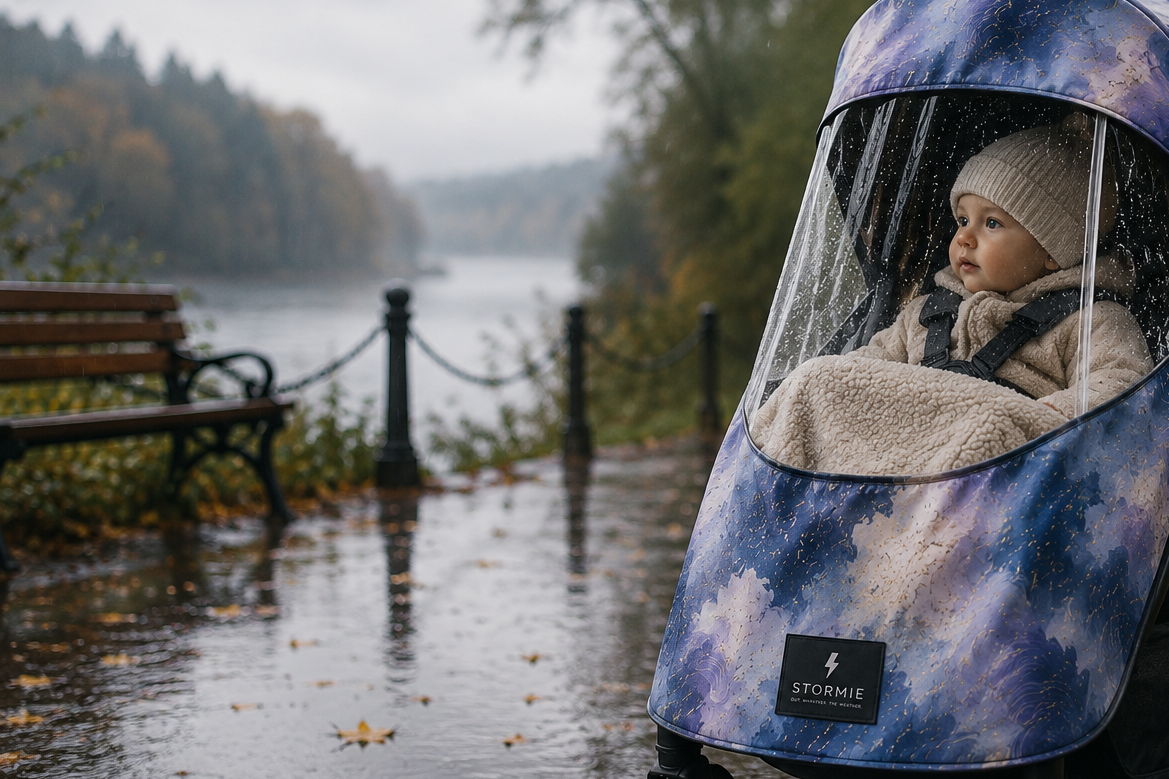
Large, clear viewing panels help you check on your little one without constantly lifting the cover, while also allowing children to continue seeing the world around them rather than feeling enclosed.
It might seem like a small detail, but it makes a surprising difference on longer walks.
4. Easy access
Real life doesn’t stop because it’s raining.
You’ll still need to hand over snacks, replace a dropped comforter, zip up a coat or wipe a nose.
The easier it is to reach your child without removing the entire cover, the more useful the product becomes.
Convenience matters because weather rarely waits patiently.
5. Secure attachment
Strong winds can quickly expose the weaknesses of a poorly fitted rain cover.
Look for attachment points or fitting systems that keep the cover securely in place without constant adjustment.
A secure cover also helps maintain visibility and keeps openings where they’re intended to be.
6. Durable materials
Waterproof materials are important, but durability matters just as much.
The best covers are designed to cope with repeated folding, packing away, pulling over the stroller and everyday family life.
Check that zips, seams and clear panels all feel robust rather than flimsy.
7. Easy storage
Eventually the rain stops.
When it does, you’ll want a cover that folds away neatly rather than becoming an awkward wet bundle hanging from your pushchair.
Compact storage often becomes one of the features parents appreciate most after a few months of use.
The real-life test
Forget product descriptions for a moment.
Instead, imagine this situation.
You’ve just left the café.
It starts raining unexpectedly.
You’re holding a coffee in one hand, steering the stroller with the other and your toddler is asking for their snack.
Ask yourself:
- Can you fit the cover in under a minute?
- Can you still clearly see your child?
- Can your child still see out?
- Can you reach them without removing everything?
- Does the cover stay securely in place?
- Can you store it easily once the rain passes?
If the answer is “yes” to each question, you’ve probably found a practical rain cover.
That’s the test that matters.
Common mistakes
Parents often make life harder than it needs to be.
Here are a few things worth avoiding.
Buying purely on price
The cheapest option isn’t always the best value if it’s difficult to use or doesn’t last.
Ignoring compatibility
Always check the manufacturer’s compatibility information before purchasing.
A rain cover that doesn’t fit correctly is unlikely to perform as intended.
Blocking ventilation
Never cover intended ventilation openings or modify a rain cover in ways that affect airflow.
Waiting until the first storm
Practise fitting your rain cover at home before you actually need it.
Learning during sunshine is far easier than learning during a downpour.
Continuing to use a damaged cover
If a rain cover becomes torn, damaged or no longer fits securely, replace it.
Small problems can become much bigger once the weather turns.
A simpler approach
Good wet-weather routines are usually very simple.
Keep your rain cover somewhere you can reach quickly.
Fold it the same way every time.
Allow it to dry fully before storing it for long periods.
Carry a small muslin cloth or microfibre cloth to wipe away condensation if needed.
And remember that no accessory should make family outings feel more complicated.
The best products quietly do their job without demanding your attention.
The takeaway
A good stroller rain cover isn’t about impressive marketing claims.
It’s about making ordinary family life a little easier.
Look beyond the word waterproof and think about how the cover will actually fit into your day.
Can you use it quickly?
Can you comfortably check on your child?
Will it stay secure when the weather changes?
Can you pack it away without frustration?
Those are the questions worth asking before adding any rain cover to your basket.
When you choose with everyday life in mind, you’ll spend less time wrestling with accessories and more time enjoying the walk—even if the weather has other ideas.
Frequently Asked Questions
What should you look for in a stroller rain cover?
Look for a secure fit, suitable ventilation, good visibility, easy child access, durable waterproof materials, secure attachment and compact storage. The best rain cover is one that’s simple to use in everyday family life.
Is a stroller rain cover the same as a pushchair rain cover?
Yes. “Stroller” and “pushchair” are simply different names used in different countries. In this guide, they refer to the same type of weather cover.
What should I check for safe airflow?
Use the rain cover exactly as the manufacturer intended and ensure any designed ventilation openings remain clear. Never block vents or alter the cover in ways that could affect airflow.
How do I make a rain cover easier to use day to day?
Practise fitting it before you need it, store it somewhere easy to reach, fold it consistently after each use and allow it to dry fully before putting it away.
When should I stop using or replace a damaged rain cover?
Replace a rain cover if it becomes torn, the fastenings no longer work properly, visibility is significantly reduced or it no longer fits securely according to the manufacturer’s guidance.

Written by STORMIE Admin